
2026 Commercial Lease Expiry Must-Read: A Complete Guide to Reinstatement Works for Hong Kong Offices and Shops
All InformationI2026/06/22
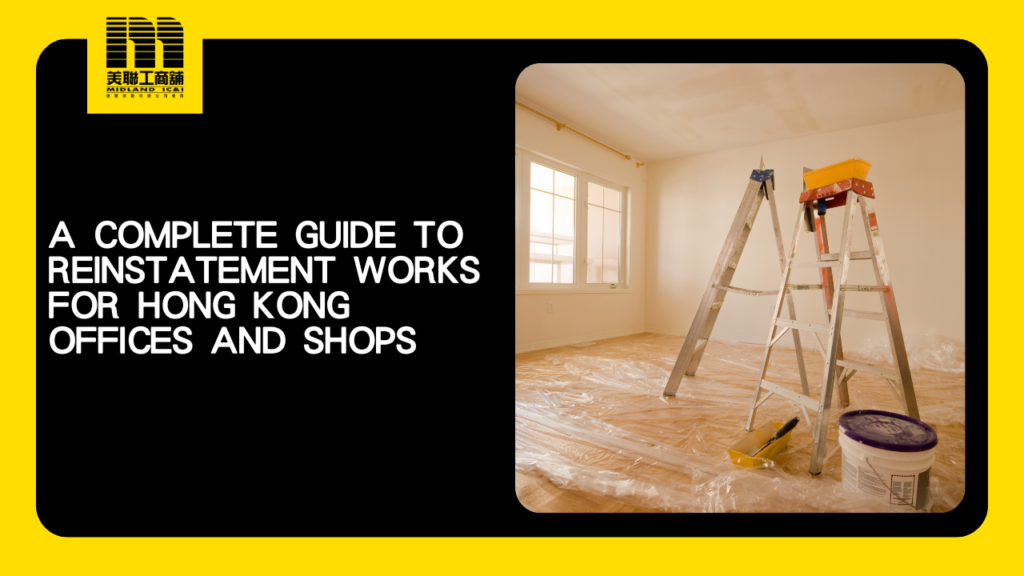
Lease expiry is not just about moving out – it is a test of “reinstatement”. For business owners and entrepreneurs in Hong Kong, the expiry of a commercial lease often comes with the hassle of relocation. However, many overlook the most troublesome part of the lease – reinstating the unit (Reinstatement / Make Good).
In 2026, with tighter environmental regulations and fluctuating renovation costs, reinstatement requirements are stricter than ever. Mishandling can lead to delays in handing over the premises (incurring rental compensation) or, worse, forfeiture of several months’ deposit by the landlord. This article breaks down the key points of commercial unit reinstatement to help you hand over smoothly and painlessly.
1. What is “Reinstatement Works”? Who Sets the Standard?
In Hong Kong’s commercial leasing market, “reinstatement” means that before vacating, the tenant must restore the property to its “original state before the lease took effect” (Bare Shell condition) or to an agreed condition.
Common reinstatement standards in 2026 include:
- Demolish all fit‑out works: Remove all partitions, false ceilings, carpets, self‑installed electrical wiring, and data cables.
- Restore M&E systems: Return fire sprinkler heads, air‑conditioning ducts, and light fixtures to their original positions as per the approved plans.
- Repair and cleaning: Fill wall nail holes, repaint (usually white), and repair damaged floor screed.
- Waste disposal: Must comply with the latest 2026 Environmental Protection Department’s construction waste disposal charging standards and provide a valid landfill gate pass.
💡 Expert tip: The reinstatement standard is not a matter of guesswork – it is governed by the terms in the Tenancy Agreement and the Handover Condition Report at lease commencement. If you took over the previous tenant’s fit‑out (commonly known as “handover with existing decoration”), you may be responsible for demolishing that previous fit‑out as well!
2. Three Major Pitfalls of 2026 Reinstatement – Details Often Overlooked by Business Owners
According to our platform’s data, a major cause of tenancy disputes is the discrepancy in the level of reinstatement. The most common points of contention are:
- The “hidden” cost of fire safety systems. In recent years, fire safety regulations have been strictly enforced. If you altered the fire hose positions or added partitions during your tenancy, you not only need to dismantle them but also engage a Registered Fire Service Installation Contractor (RFSIC) to re‑issue a Fire Certificate (FS 251). Failure to present this certificate on time gives the landlord the right to refuse to accept the handover.
- Discrepancy in the definition of “vacant possession”. Many tenants think that moving the furniture out is enough. However, legally, if any rubbish, unremoved signage, or even an unfixed broadband cable remains, the landlord may treat it as “Failure to deliver vacant possession” and charge double rent (Mesne Profits) on a daily basis as compensation.
3. Choose “Cash Compensation” or “Self‑Reinstatement”?
Market practice usually gives tenants two options:
- Option A – Hire a contractor to reinstate yourself:
- Advantage: You can shop around; it is usually cheaper than the landlord’s designated contractor.
- Disadvantage: You need to supervise the work; if the handover inspection fails, you will have to make secondary rectifications at your own risk.
- Option B – Pay the landlord a “Payment in Lieu of Reinstatement”:
- Advantage: Time‑saving and hassle‑free – once you pay, responsibility shifts to the landlord, and you can walk away.
- Disadvantage: The landlord’s quotation usually includes administrative fees and higher profit margins, making it more expensive.
Recommendation: If your company has limited administrative staff and the landlord’s price is within a reasonable range (e.g., market rate +15% or less), “cash compensation” is often more cost‑effective as it avoids the risk of handover delays.
4. 2026 Reinstatement Workflow and Timeline
To avoid forfeiting your deposit, be sure to allow sufficient time:
- 3 months before lease expiry: Review the lease to confirm your reinstatement obligations.
- 2 months before expiry: Contact the landlord or building management to obtain the “Reinstatement Specification Guide” and floor plans.
- 1.5 months before expiry: Invite 2–3 qualified contractors for on‑site quotations (including insurance and waste disposal fees).
- 1 month before expiry: Select a contractor, apply to the building management for a work permit, and pay the renovation deposit.
- 14 days before expiry: Start construction (depending on area; for a 1,000 sq. ft. unit, this typically takes 7–10 days).
- 3 days before expiry: Complete cleaning and schedule a pre‑inspection with the landlord.
- On expiry date: Officially hand over the keys and sign the handover documents.
5. How to Save on Reinstatement Costs – Practical Tips for Entrepreneurs
- Make good use of “handover with existing fit‑out” platforms: If your renovation is still in good condition, try to find a new tenant to take over the lease 3‑6 months before expiry. If the new tenant is willing to accept the existing fit‑out, and the landlord agrees, you may be exempted from reinstatement obligations – this is the most cost‑effective method!
- Keep original floor plans and photos: Photos taken when you moved in are your best protection. If the landlord asks you to repair old defects that already existed, these pieces of evidence can save you unnecessary expense.
- Negotiate with the landlord to retain certain installations: Sometimes the landlord may also want to keep quality false ceilings or raised floors to attract the next tenant. Proactive communication might lead to a “partial reinstatement” agreement.
Q1: Is insurance required for reinstatement works?
A1: Absolutely. When applying for a Work Permit from the building management office, you must present two types of insurance:
- Employees’ Compensation Insurance (EC): Covers work‑related injuries of construction workers.
- Public Liability Insurance: Covers damage to the building’s common areas or third parties during the works (coverage is typically required to be between HK$10 million and HK$20 million, depending on the building grade).
Q2: Can the landlord deduct from the deposit for nail holes in the walls?
A2: Yes. Under most standard leases, the tenant must restore the property to “good and tenantable condition”. Nail holes need to be filled and repainted. If the tenant fails to do so, the landlord can hire someone to make the repairs and deduct the cost from the deposit.
Q3: What is “Fair Wear and Tear”?
A3: Fair Wear and Tear refers to normal ageing of the property under ordinary use (e.g., fading of carpet colour). Tenants are generally not responsible for this. However, if the damage is man‑made (e.g., a carpet burn from a cigarette), it does not count as fair wear and tear and must be repaired.
Q4: Does reinstatement include cleaning the air‑conditioning system?
A4: Yes. The vast majority of commercial leases require the tenant to hire professionals to clean the Fan Coil Unit (FCU) and air filters before handover.
Note: Landlords usually require a receipt for “chemical cleaning” (commonly known as air‑con cleaning). If the system is a central air‑conditioning system, you may only need to clean the supply and return air grilles – refer to the building management’s guidelines for details.
Q5: Do I need to remove electrical wires and broadband cabling under the floor?
A5: This is the most commonly overlooked hidden cost. If there is a raised floor, the tenant must remove all self‑installed power cables, data cables (CAT6/fibre optics) laid underneath.
Risk: Leaving cables behind may be considered incomplete reinstatement, as it obstructs the next tenant’s re‑cabling work.
Q6: Are there special regulations for removing outdoor signage?
A6: If your shop has an outdoor sign, its removal must comply with the Buildings Department’s “Minor Works Control System”.
Key point for 2026: You must engage a qualified grade contractor for the dismantling, and may need to submit a completion declaration to the government. If scaffolding is involved, additional scaffolding insurance and public liability insurance will be required.
Q7: Can the landlord force me to remove my fit‑out if it is still very new?
A7: Legally, the landlord has the absolute right to require reinstatement to “bare shell” condition.
Negotiation tip: Unless you can prove that the fit‑out adds value to the landlord’s re‑letting (e.g., a newly built private washroom or high‑quality meeting room), landlords usually prefer removal to avoid future maintenance responsibilities. It is advisable to submit a written request to the landlord 3‑4 months before expiry to ask for their preference.
Q8: What if the landlord delays refunding the rental deposit?
A8: Under Hong Kong practice, the landlord should refund the deposit within 30 to 45 days after vacant possession is delivered and all utility bills and compensation claims are settled.
Action: If the deadline is exceeded, first send a written demand letter. If the amount involved is not more than HK$75,000, you may consider filing a claim with the Small Claims Tribunal. However, you must have a signed “Handover Confirmation Letter” proving that the handover process has been completed.
Final Remarks
Reputation matters in the business world. Handling the reinstatement works properly after lease expiry not only helps you recover the full deposit but also maintains a good relationship with the landlord and property agents – keeping the door open for future business expansion.
Looking for your next office or shop premises?
Browse our latest listings of industrial, commercial, and shop properties, or contact our professional consultancy team for one‑stop advisory services from leasing to reinstatement works.
(This article is based on 2026 market projections and general commercial practices. The specific obligations are subject to the tenancy agreement signed by both parties.)
Disclaimer: The information contained in this document is intended for general reference only. The Company has endeavored to ensure the accuracy of the information provided; however, no guarantee, express or implied, is made as to the completeness, timeliness, or accuracy of such information. As property conditions vary by individual case, the Company shall not be held liable or responsible for any loss or damage incurred as a result of the reader's reliance upon or use of the information presented herein.
![[2026 Policy Address Guide] Hong Kong’s First Five-Year Plan Unveiled! How Will Northern Metropolis & and Mega-Event Economy Affect the Commercial Property Market? | Midland IC&I](https://s3.ap-northeast-1.amazonaws.com/wpcontent.midlandici.com/2026/thumbnail-sample-.059-600x338.png)


Latest News