
[2026 Guide] 11 Hidden Costs of Renting Commercial Property in Hong Kong You Must Know (With Stamp Duty Calculator & Real Cases)
All InformationI2026/07/21
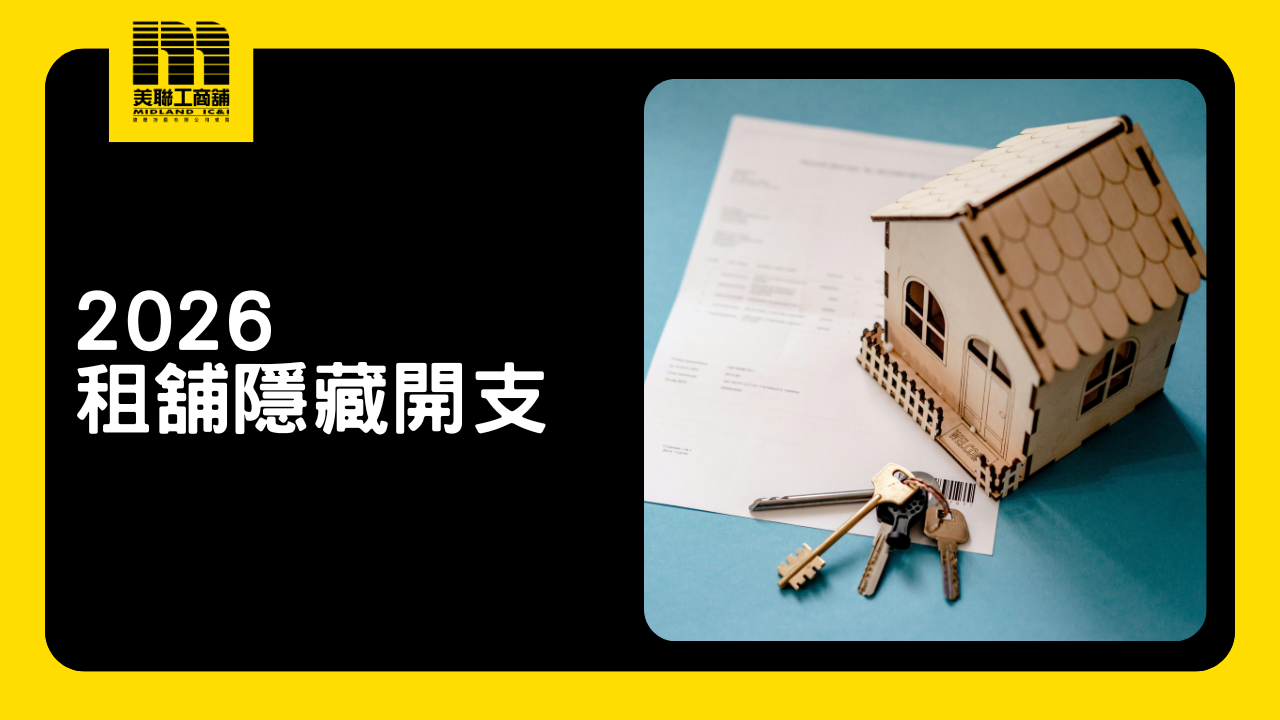
【Executive Summary】
Renting a commercial property or retail shop in Hong Kong in 2026 requires more than just the monthly rent. Tenants must prepare a cash flow equivalent to at least 4 months’ rent (two months’ deposit, one month’s advance rent, and agency commission). The core hidden expenses include legal fees, stamp duty, renovation and reinstatement costs, insurance, management fees, utilities, air conditioning (AC) charges, rates and government rent, licensing fees, and various utility deposits. Always confirm whether the quoted rent is “all-inclusive” before signing the tenancy agreement to avoid budget overruns!
【MidlandIC&I 2026 Expert Insights & Real Cases】
According to transaction data from Midland Commercial’s frontline agents in the first half of 2026, over 20% of new tenants (especially in the F&B and retail sectors) severely exceeded their initial setup budgets due to overlooking “Overtime (OT) AC charges” and “fire equipment reinstatement costs.”
Recently, we assisted a tenant in renting an industrial unit in Kwun Tong. We successfully negotiated a 30-day rent-free period and ensured the rent was fully inclusive of rates and government rent, saving the tenant nearly HK$60,000 in upfront costs.
Need professional assistance in renting commercial space? Contact MidlandIC&I today!
11 Hidden Costs of Renting Commercial Property in Hong Kong
| Expense Item | Budget / Details | 2026 Pro Tips & Pitfalls to Avoid |
|---|---|---|
| 1. Agency Commission | Usually equivalent to 1 month’s rent (paid entirely by one party or split equally between landlord and tenant). | Prepare for “2 deposits + 1 advance” plus commission. You need cash flow for at least 4 months’ rent. |
| 2. Legal Fees | Ranges from HK$3,000 to HK$10,000+. | Land searches help avoid fatal legal traps like unauthorized building works (UBWs) or unclear ownership. |
| 3. Stamp Duty | 0.5% of average yearly rent for 1-3 year leases; 1% for leases over 3 years. | Usually split equally between landlord and tenant. Unstamped tenancy agreements are not legally protected. |
| 4. Renovation & Reinstatement | Varies by industry. Must be restored to “bare shell” upon lease expiry. | Always negotiate a 7 to 30-day rent-free period and budget for future reinstatement costs. |
| 5. Insurance | Employees’ compensation, third-party liability, fire, and all-risks insurance. | 2026 regulations are strict; operating without third-party insurance can lead to heavy penalties. |
| 6. Management Fees | ~HK$1/sq.ft. for old industrial buildings; HK$3.5+/sq.ft. for new commercial buildings. | Confirm if the lease is “All-Inclusive” (covering rates, government rent, and management fees). |
| 7. Utilities | Depends on usage; watch out for gas connection fees. | For subdivided offices, ensure there are “independent utility meters” to prevent overcharging. |
| 8. Air Conditioning (AC) | Independent AC: pay your own electricity. Central AC: usually included in management fees. | Highly overlooked! Always check central AC operating hours and “Overtime (OT) AC charges.” |
| 9. Rates & Gov. Rent | Rates: 5% of rateable value; Gov. Rent: 3%. | Legally the landlord’s responsibility, but commercial practice often shifts this to the tenant. Clarify in the contract. |
| 10. Licensing Fees | Business Registration (BR) is ~HK$2,150 + industry-specific licenses. | F&B and tutorial centers must budget for licensing consultants and fire safety modifications. |
| 11. Misc. Deposits | Water, electricity, gas, and broadband deposits. | Utility deposits for commercial accounts are significantly higher than residential ones. |
Stamp Duty Calculator for Tenancy Agreements
Calculation Method (Based on average yearly rent):
- Unspecified or unfixed term: 0.25%
- Lease term of 1 year or less: 0.25%
- Lease term of 1 to 3 years: 0.5%
- Lease term longer than 3 years: 1% of the yearly or average yearly rent
- Key money / Construction fee mentioned in the lease: 4.25% of the consideration (if rent is also payable under the lease); otherwise, same stamp duty as a sale of immovable property.
- Duplicate / Counterpart: HK$5 per copy
Practical Tool: Midland Commercial Tenancy Agreement Stamp Duty Calculator
(Data Source: Inland Revenue Department of Hong Kong)
Frequently Asked Questions (FAQ) – 2026 Commercial Renting Guide
Q1: Can I skip paying stamp duty for my commercial lease in 2026?
A: It is strongly discouraged. An unstamped tenancy agreement is generally not admissible as evidence in civil proceedings. If a tenancy dispute arises (e.g., unreasonable rent hikes or rent arrears), neither party’s rights will be legally protected.
Q2: What does “Two deposits and one advance” mean in Hong Kong renting?
A: This is the standard payment structure in Hong Kong’s rental market. Upon signing, tenants must pay “two months’ rent as a security deposit” plus “the first month’s rent in advance,” totaling three months’ rent. Factoring in the agency commission, you need upfront cash flow equivalent to about 4 months’ rent.
Q3: What are the hidden traps regarding air conditioning fees in office buildings?
A: If the building uses central air conditioning, you must ask about the standard supply hours and the Overtime (OT) AC charges. Some commercial buildings charge hundreds of dollars per hour for OT AC. Industries that frequently work late (like IT or design firms) should prioritize units with independent split-type ACs.
Q4: Does the rent usually include management fees and rates?
A: Not necessarily. Commercial listings are categorized as “All-inclusive” (covering rates, government rent, and management fees) or “Exclusive.” You must clarify this before signing, otherwise, you could face thousands to tens of thousands of dollars in extra monthly expenses.
Q5: How much does “reinstatement” usually cost when moving out?
A: It depends on the property size and the extent of your alterations. Standard commercial leases require tenants to return the unit in a “Bare Shell” condition. Demolishing renovations and reinstating fire service installations can easily cost tens to hundreds of thousands of Hong Kong dollars. It is highly recommended to factor this into your budget before opening your business.
Want to avoid commercial renting traps? Need to accurately calculate your stamp duty or find an “all-inclusive” bargain? Contact MidlandIC&I now! We provide the latest 2026 market intelligence, free leasing consultations, and exclusive rent-free period negotiation services!
Disclaimer: The information contained in this document is intended for general reference only. The Company has endeavored to ensure the accuracy of the information provided; however, no guarantee, express or implied, is made as to the completeness, timeliness, or accuracy of such information. As property conditions vary by individual case, the Company shall not be held liable or responsible for any loss or damage incurred as a result of the reader's reliance upon or use of the information presented herein.
Latest News
Top